06 / 06
Booking Badhao
One shared data model, two purpose-built apps for staff and customers.
Problem
A restaurant needed both an internal system to run day-to-day operations and a separate, lighter app for customers to order food - without keeping two disconnected copies of the same menu and pricing data.
Build
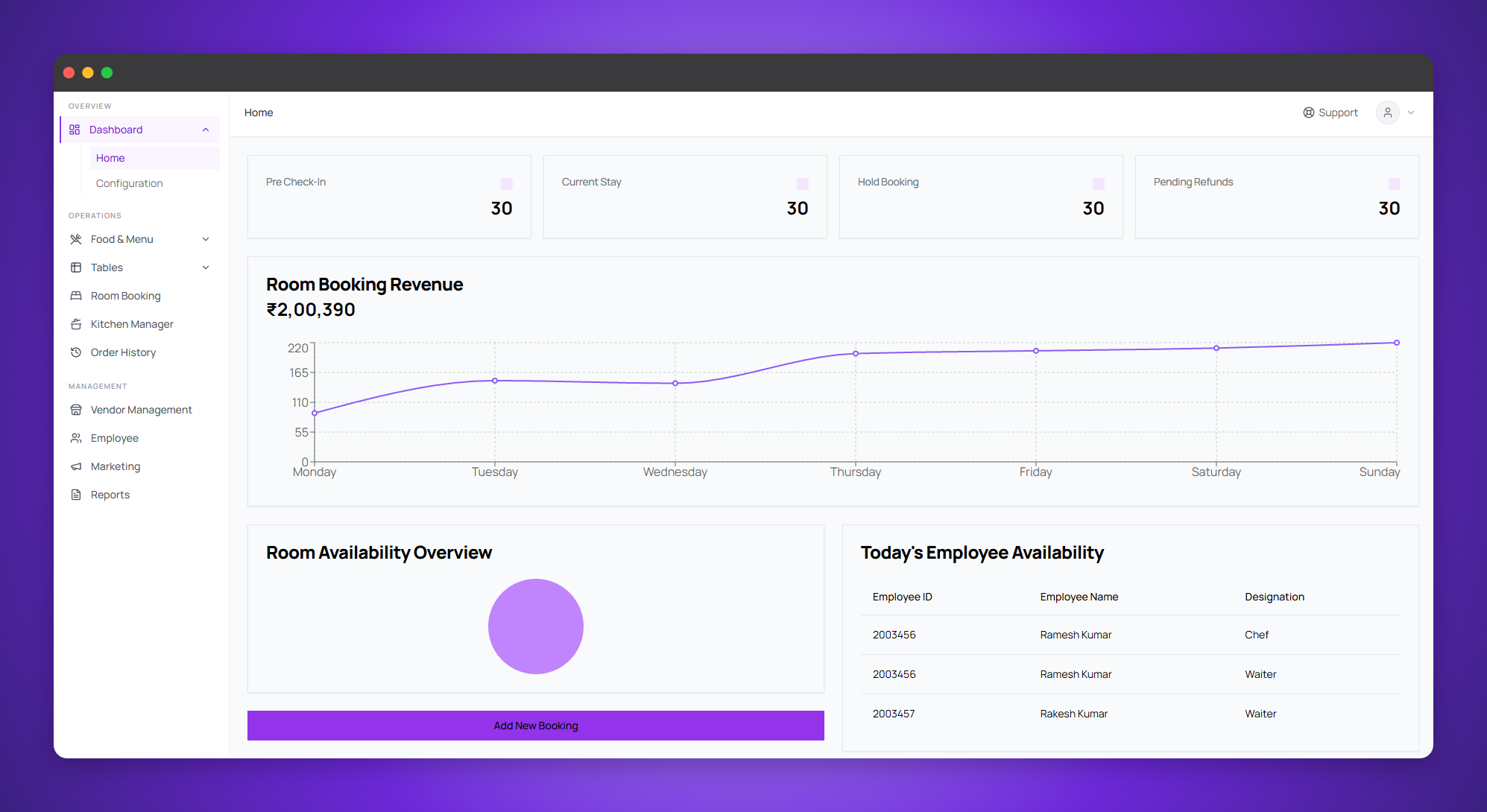
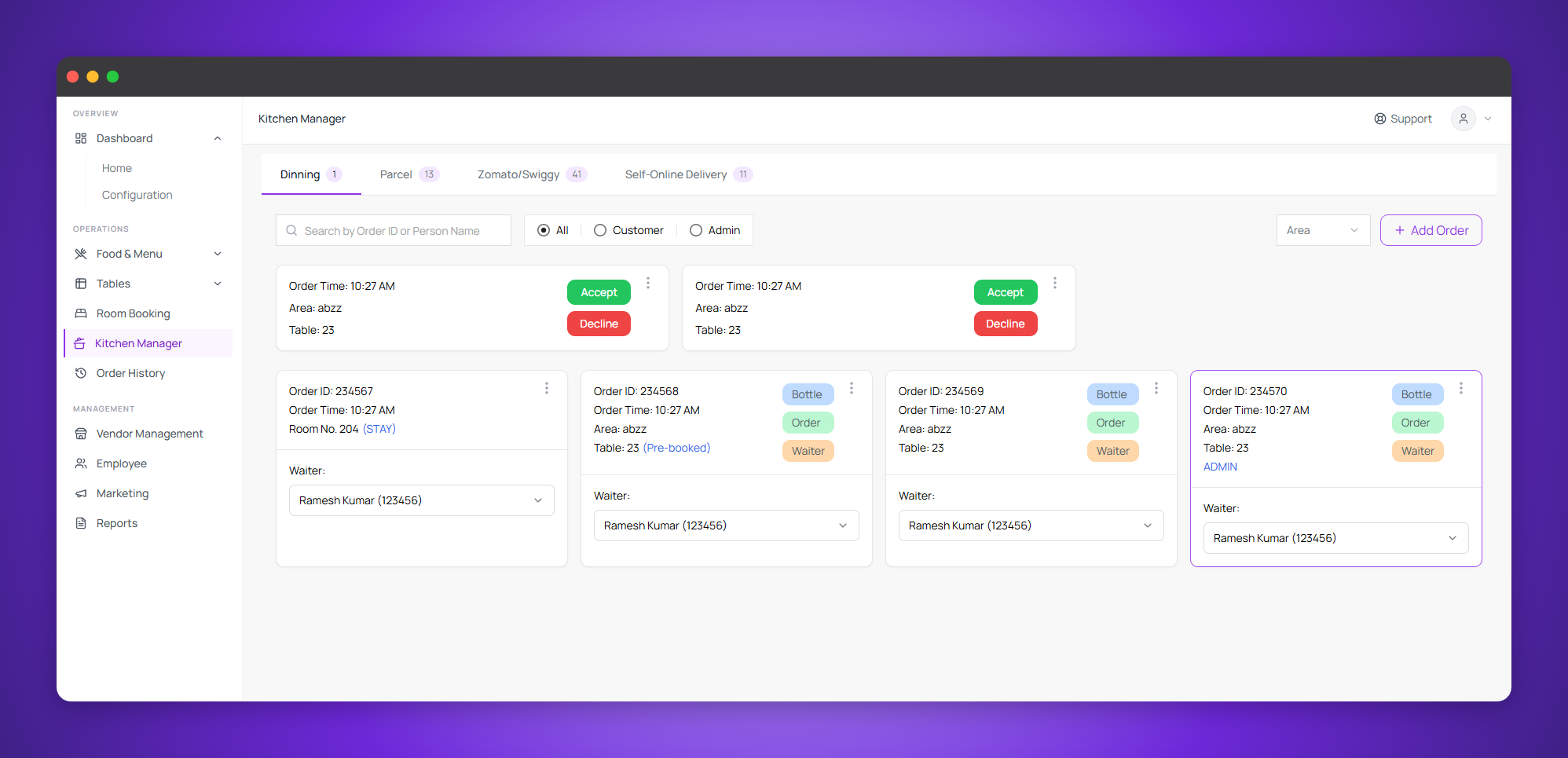
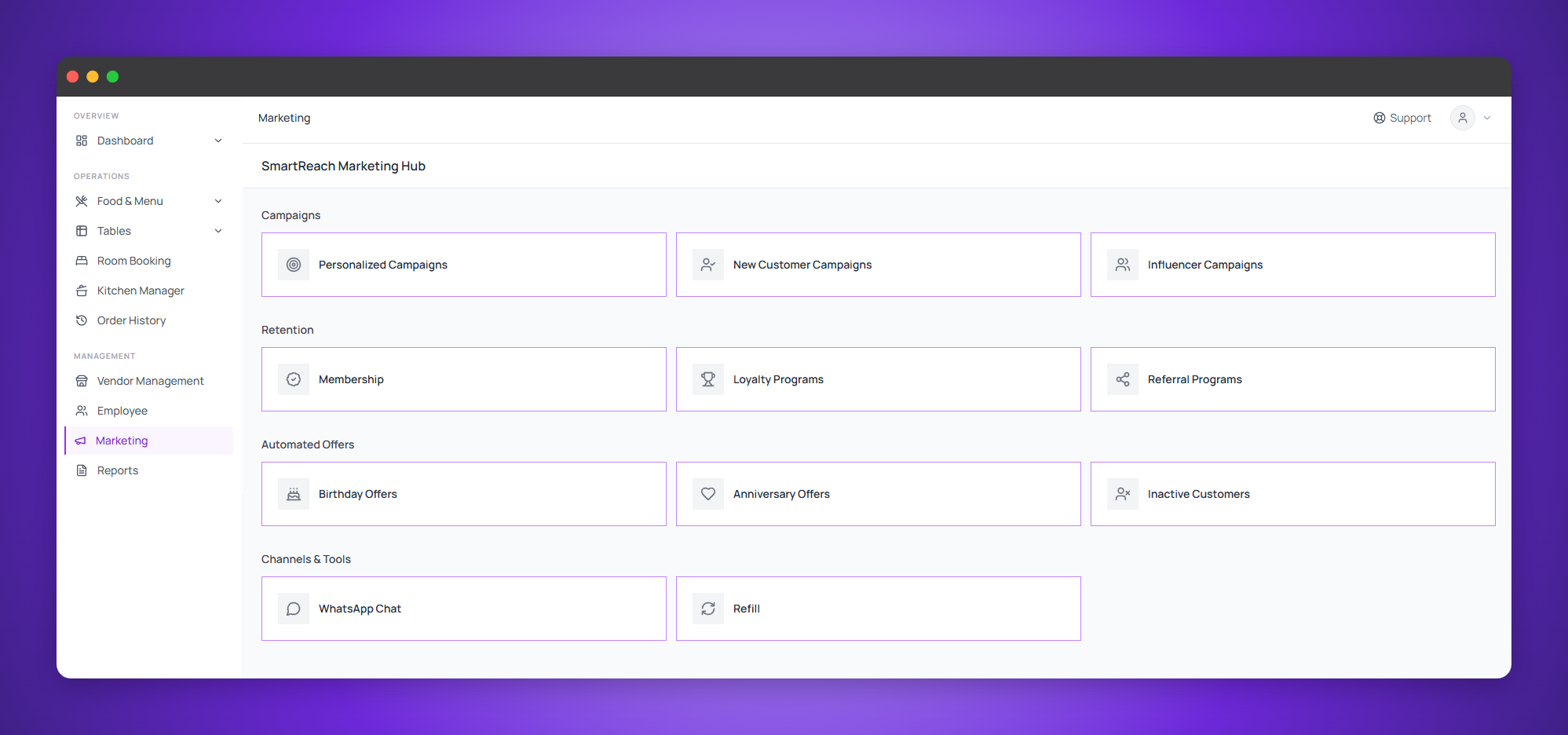
Two apps sharing one underlying database: a full management app for staff, covering the menu, tables, kitchen order tickets, purchasing from vendors, and marketing campaigns, and a newer, simpler ordering app for customers to browse the menu and its options. Because both apps share the same underlying data and validation rules, a menu change made in one place shows up correctly everywhere.
Outcome
A single coherent data model serving two very different audiences - staff and customers - through purpose-built apps, with shared code keeping the menu and rules from drifting apart as both apps evolve. Still mid-development, with a few known gaps, like a missing automated test suite, tracked openly in the project's own notes rather than papered over.
What We Built
Key features
Admin / vendor app
- 01Menu, category, and add-on management with a kitchen order board
- 02Table and room booking alongside area management
- 03Vendor and raw-material purchasing with pricing
- 04A 7-type marketing suite — loyalty, referral, birthday, and re-engagement campaigns
Customer app
- 01A landing page and a browsable, filterable menu
Gallery
More of the build
Tech Stack
What it's built with
- Turborepo
- React
- Next.js
- Express
- Prisma
- PostgreSQL
Worth knowing
Add-ons like "extra cheese" are defined once and reused across every location and menu item - a more sophisticated setup than the simple idea suggests.